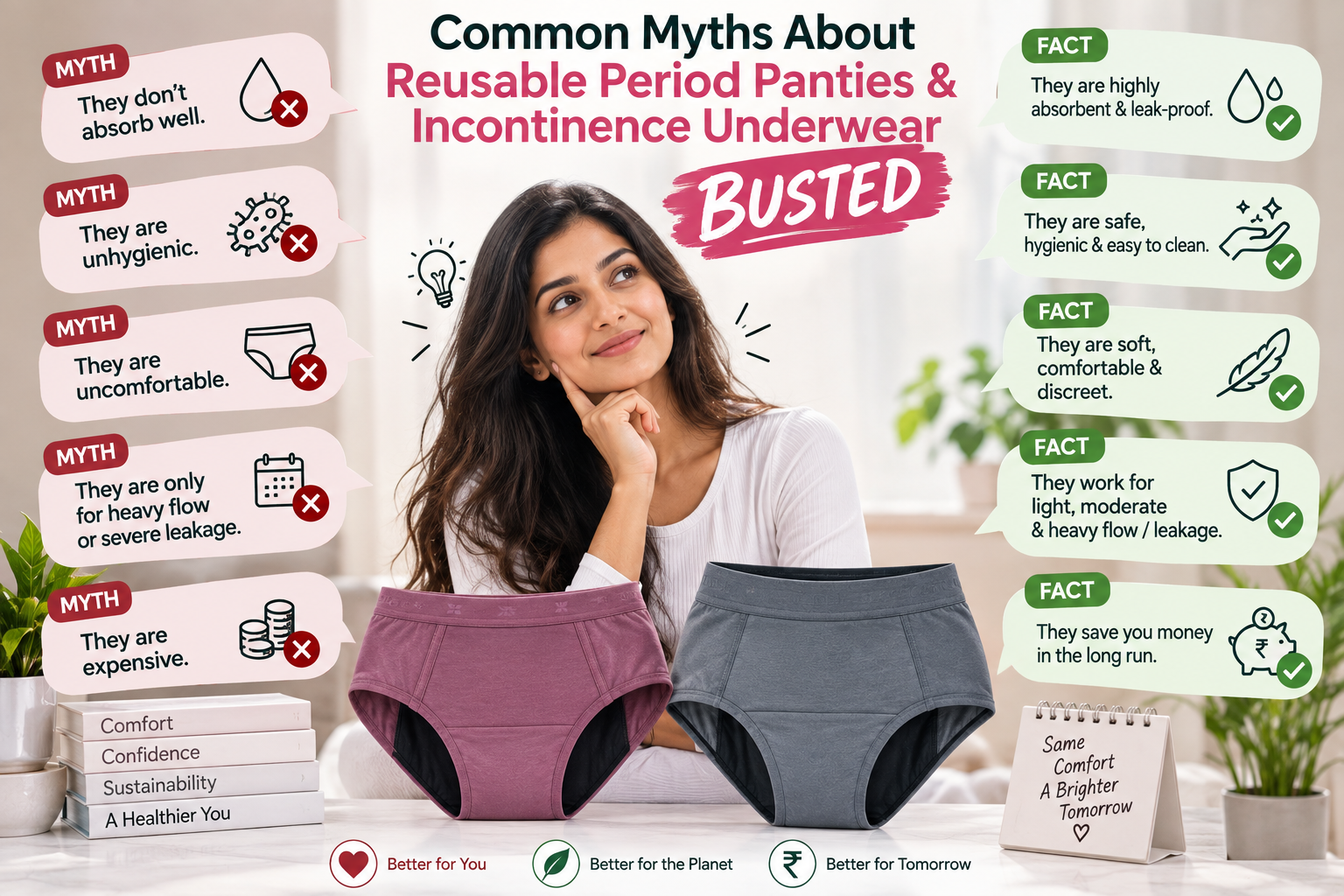
Despite growing popularity, reusable period panties and incontinence underwear are still surrounded by misconceptions that stop many people from trying them. Most of these myths come from outdated assumptions — based on older, bulkier products — rather than how these products actually work today. Let’s clear up the confusion, one myth at a time.
Myth 1: “They Feel Wet or Uncomfortable”
This is probably the most common concern, and it’s simply not true with modern designs. Products like Relieff+ use a triple-layer construction where the inner layer stays dry to the touch, even while actively absorbing fluid underneath. The soft cotton lining sits gently against skin, so there’s no clammy or damp sensation the way older, cheaper alternatives sometimes felt.
Myth 2: “They’re Bulky and Visible Under Clothes”
Many people still picture thick, diaper-like padding when they think of reusable protective underwear. In reality, both period panties and incontinence underwear are engineered to look and feel like regular underwear. The leakproof layer is built directly into the fabric rather than added as a separate insert, which keeps the profile slim and completely undetectable under everyday clothing.
Myth 3: “They Don’t Offer Enough Protection for Heavy Flow or Daily Use”
This myth holds people back more than almost any other. In truth, quality reusable underwear is designed to handle up to 15 hours of protection, making it suitable for heavy flow days, overnight wear, or all-day incontinence management. The triple-layer leakproof technology is specifically built to handle sustained use, not just light spotting.
Myth 4: “Washing Them Is a Hassle”
The care routine is far simpler than most people expect. A quick cold-water rinse after use, followed by a regular machine or hand wash with mild detergent, is all it takes. There’s no special equipment or complicated process — it fits easily into a normal laundry routine, with no more effort than washing any other item of clothing.
Myth 5: “Reusable Products Are More Expensive Than Disposables”
This is true only if you look at the very first purchase in isolation. Over any meaningful period of time — a few months for period care, or a similar window for incontinence needs — reusable products come out significantly cheaper. One pair, reused for 2–3 years, replaces what would otherwise be hundreds of disposable purchases. The upfront cost is simply a one-time investment that pays for itself quickly.
Myth 6: “Incontinence Underwear Is Only for Elderly Men”
While age-related bladder changes are one common reason for incontinence, they’re far from the only one. Prostate surgery recovery, certain medical conditions, and even active lifestyles can all affect bladder control at any age. Modern incontinence underwear is designed for a wide range of users, not just older men — and its discreet, comfortable fit makes it practical for anyone who needs reliable, everyday protection.
Myth 7: “Switching Means Compromising on Hygiene”
Some assume reusable products are somehow less hygienic than single-use disposables. In practice, the opposite tends to be true when products are washed correctly. Breathable cotton fabric reduces the heat and moisture buildup that often causes rashes and irritation with disposables, making reusable options a genuinely healthier choice for regular use.
Myth 8: “One Pair Won’t Be Enough — You’ll Always Be Doing Laundry”
This concern usually comes from not knowing how reusable products fit into a rotation. In practice, most users keep 2–3 pairs in regular circulation — one in use, one clean and ready, one in the wash. This is no different from how anyone manages regular underwear, and it means you’re never actually short on a clean, ready pair.
Myth 9: “They Won’t Fit Properly or Feel Like ‘Real’ Underwear”
Sizing charts (S to XXL) exist for a reason — a well-fitted pair should feel snug but not restrictive, with a waistband that sits comfortably without digging in. When sized correctly, most users report forgetting they’re wearing protective underwear at all, which is exactly the point. The goal was never to feel like a “medical product” — it was to feel like your everyday underwear, just with extra protection built in.
Myth 10: “Reusable Products Aren’t as Trusted as Big Disposable Brands”
Trust isn’t about how long a brand has existed — it’s about the technology behind the product. Reusable period and incontinence underwear brands undergo the same rigorous testing for absorbency and leak protection as any disposable product. In many cases, the added benefit of reusability, cost savings, and skin-friendliness makes them the more thoughtfully engineered choice, not a lesser one.
Frequently Asked Questions
How many pairs do I actually need?
Most people find 3 pairs comfortable — enough to rotate through wash cycles without running out of clean options.
Can I wear them for exercise or travel?
Yes. Their slim, secure fit makes them suitable for workouts, flights, and long days out, without the shifting or bulk that pads or disposables can cause.
Do they work for heavy flow or severe incontinence?
Yes, when sized and chosen correctly. Heavier-duty options with extended absorbency are designed specifically for higher-need cases — checking sizing and absorbency guides before purchase helps ensure the right fit.
How long does one pair actually last before it needs replacing?
With proper care, most pairs maintain full effectiveness for 2–3 years before absorbency naturally starts to decline.
Why These Myths Persist
Most of these misconceptions trace back to earlier generations of reusable products — ones that genuinely were bulkier, less absorbent, or harder to maintain. Fabric technology and design have advanced significantly since then, but perception often lags behind reality. The best way to move past these myths is simply trying a well-made, modern product and experiencing the difference firsthand.
The Bigger Picture
Beyond debunking individual myths, it’s worth remembering why this shift matters in the first place: lower long-term cost, reduced environmental waste, and genuinely better comfort for skin and daily life. Once the misconceptions are cleared away, the decision to switch becomes a fairly easy one for most people. It’s also worth noting that as more people make this switch, the stigma around both period care and incontinence management continues to fade — normalizing conversations that used to be avoided entirely.
Final Thoughts
If any of these myths have held you back from trying reusable period panties or incontinence underwear, it might be time to reconsider. Modern products like Relieff+ are built specifically to solve the problems people associate with older alternatives — comfort, discretion, absorbency, and ease of care are no longer trade-offs you have to make.
Try Relieff+ and see for yourself how far reusable protection has come..